
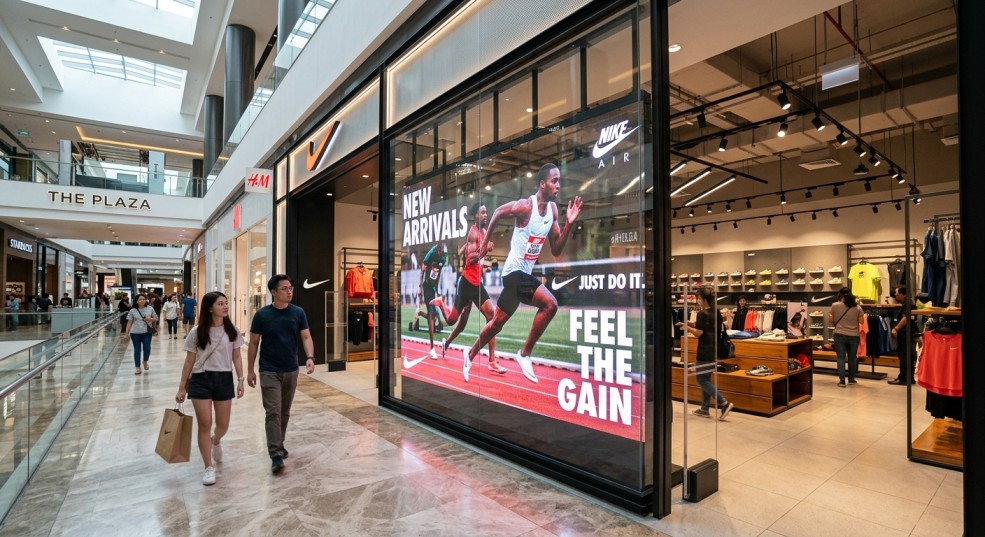
A transparent LED screen is a display solution that allows viewers to see dynamic digital content while simultaneously seeing through the glass panel behind it. By arranging micro-LEDs on slim bars with open spaces between them, transparent LED screens emit bright visuals without blocking natural light or physical visibility. Today, this technology is transforming retail storefronts, commercial building facades, and event stages by blending digital media with physical surroundings.
Remember the sci-fi movies of the early 2000s, such as Iron Man, where characters routinely interacted with floating data on clear glass? Back then, viewers saw these visual effects as distant, futuristic concepts. Today, that technology has arrived in the commercial world—transparent LED screens have officially crossed the threshold from Hollywood special effects into high-impact digital signage.
Unlike traditional opaque monitors, a transparent LED screen allows ambient daylight and the physical environment to remain visible through the display panel. Instead of staring at a solid black box, passersby can look straight through the glass surface to view interior products while dynamic videos, crisp text, and animations appear to float seamlessly in mid-air.
While it may still feel like pure futurism, transparent LED screen technology is rapidly maturing into an essential tool for business. Driven by major breakthroughs in LED manufacturing, these high-brightness see-through displays are now leading the market for large-scale retail storefronts, event backdrops, and modern architectural design.
How Do Transparent LED Screens and See-Through Displays Work?
The primary challenge of building a see-through screen is allowing natural light to pass through the panel while simultaneously outputting bright, clear images. Traditional LED monitors rely on a solid, opaque backing to house wiring and block light, resulting in zero transparency. A transparent LED screen eliminates this solid backing entirely.
Engineers accomplish this by mounting ultra-fine LED strips onto a light-emitting grid, ensuring the spacing between diodes remains open and clear. When the pixels are turned off, the panel functions just like a standard glass window. When powered on, the high-intensity diodes illuminate to project vibrant videos and graphics that appear to float in mid-air.
What Are The Key Types of Transparent Display Technology, Including Transparent OLEDs?
The market currently relies on a few distinct technological approaches to achieve screen transparency. Each method offers different advantages regarding brightness, resolution, and scalability.
- Transparent LED Screen: A transparent LED screen is highly bright and relies on a mesh-like grid of micro-LEDs embedded within or applied to a glass panel. Because the LEDs are incredibly small, the human eye cannot detect the wiring from a distance. Transparent LED screens are the preferred choice for massive architectural installations, such as skyscraper windows or large concert stages. The trade-off is a lower pixel density compared to smaller consumer screens, making them better suited for distant viewing rather than up-close text reading. Choose a transparent LED screen if your project requires massive scale, outdoor visibility, and high brightness.
- Transparent OLED (TOLED): Transparent OLED displays use self-emitting pixels, so an OLED display generates its own light without a backlight, unlike LCDs. TOLED screens use transparent organic compounds and clear electrodes. These displays offer stunning contrast and rich colours, along with high pixel density. They are ideal for close-up viewing, such as luxury retail cabinets or high-end consumer televisions.
Comparing Transparent LED Screens vs. Transparent OLEDs
To help you decide which see-through display fits your venue, here is how the two primary commercial technologies stack up:
| Key Feature | Transparent LED Screen | Transparent OLED (TOLED) |
|---|---|---|
| Transparency Level | 70% to 80%+ | Approx. 40% to 45% |
| Brightness Output | High (Up to 6,000+ nits) | Moderate (~400 nits) |
| Standard Sizes | Fully modular & custom-built | Fixed panels (45″, 55″, 77″) |
| Optimal Distance | Medium to long range (3m+) | Close-up / interactive (0.5m – 2m) |
| Best Applications | Retail windows, building facades, stages | Luxury display cases, museum touch kiosks |
Which Should You Choose?
- Choose a Transparent LED Screen if you need high brightness for outdoor visibility, custom modular dimensions, and high-impact branding on commercial glass windows.
- Choose a Transparent OLED if your project requires close-up interactive touch features, ultra-fine text resolution, and controlled indoor lighting.
Real-World Applications of Transparent LED Screens
Transparent display technology has officially transitioned from research laboratories into high-impact commercial installations. Today, businesses across multiple industries deploy transparent LED screens to merge dynamic digital media with physical surroundings:
Smart Retail Storefronts
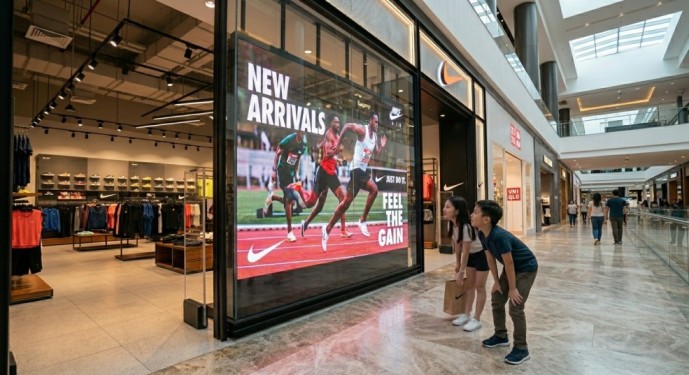
Modern retailers use indoor transparent LED screens behind shopfront windows as dynamic digital signage. Stores can broadcast high-definition video campaigns, promotional offers, and animated logos while keeping interior products and store layouts fully visible to foot traffic.
Architectural Glass Facades
Architects and building owners are transforming glass exteriors and atrium walls into functional digital assets. Integrating an outdoor transparent LED screen into a building facade allows the structure to act as a massive digital billboard at night while allowing natural daylight to pass through for office occupants during the day.
Public Transit & Smart Infrastructure
Airports and major transit hubs utilize transparent displays on glass partitions and terminal windows to show real-time schedules and route updates without creating bulky visual barriers.
What Are The Major Challenges and Limitations of Transparent Displays?

Why Do Ambient Light Interferences Wash Out Transparent Displays?
Because transparent screens allow natural light to pass through them, intense sunlight or bright environment lighting can overwhelm lower-brightness displays. However, high-brightness commercial transparent LED screens (engineered at 5,000 to 6,000+ nits) effectively combat daylight interference, keeping visual content crisp and visible even on sunny glass storefronts and outdoor building facades.
What Are The Privacy Concerns Surrounding Transparent Technology?
A core feature of any transparent screen is its bidirectional visibility—meaning people can see through the panel from both sides. While this makes a transparent LED screen an outstanding tool for retail promotion and public branding, it is not designed for viewing confidential data or private computing tasks.
What Is The Future Outlook for Transparent LED Screen Technology?
The future of see-through displays points toward a seamless blending of digital media with physical architecture. As manufacturing efficiency improves and pixel densities become finer, transparent LED screens will expand beyond store windows into everyday glass surfaces across cities.
How Will Transparent Displays Synthesise Augmented Reality (AR)?
Currently, experiencing Augmented Reality typically requires wearing AR glasses or looking through a smartphone screen. Transparent LED screens bridge this gap by displaying floating graphics directly onto glass, transforming retail shopfronts and building windows into hardware-free AR interfaces integrated naturally into a viewer’s line of sight.
Get Your Transparent LED Screens Now!
Do you need assistance selecting the best transparent LED screen for your business or event?
We offer indoor and outdoor transparent LED screens.
Share your venue layout, desired screen dimensions, and anticipated distance of viewers and we will provide the best recommendation for transparent LED screen and pixel density that best optimizes your budget and screen clarity for your audience.
Frequently Asked Questions
What is the main difference between a transparent LED screen and an OLED screen?
A transparent LED screen uses tiny discrete diodes embedded in a grid, offering massive scale, extreme brightness, and high transparency, making it ideal for outdoor architecture. A transparent OLED (TOLED) uses organic compounds to emit light, providing much higher resolution and contrast, which makes it better for close-up, indoor viewing like consumer TVs.
How much does a transparent LED screen cost?
The cost of a transparent LED screen varies heavily based on pixel pitch, overall size, and installation complexity. Commercial installations typically start at several thousand pounds per square metre, making them a significant capital investment primarily suited for enterprise and retail applications rather than casual consumer use.
Can a transparent display show the colour black?
No, a standard transparent display cannot show true black. Because black is the absence of light, turning off a pixel on a see-through screen simply renders that pixel clear, allowing the background behind the screen to show through. Achieving black requires an additional opaque blocking layer to stop light from passing through.
Are transparent screens visible in direct sunlight?
Visibility depends entirely on the technology used. A high-quality transparent LED screen can output up to 6,000+ nits of brightness, making it perfectly visible in direct sunlight. Conversely, transparent OLEDs generally lack the brightness required to compete with the sun and will wash out in bright outdoor environments.
YOUR COMMENT